That Destination Is Giving Red Flags — Here's How to Actually Listen to Your Gut Before You Book
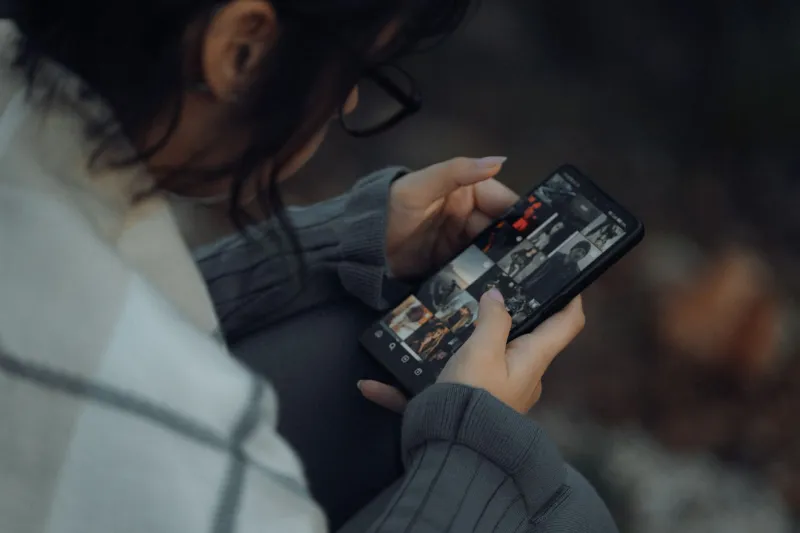
You've been scrolling for twenty minutes. The photos are stunning — golden light, empty streets, a plate of food that looks like it was styled by someone who definitely gets paid for that. The caption says something like "hidden gem, totally off the beaten path, you HAVE to go."
And somewhere in the back of your mind, something itches.
You can't name it. But it's there.
That itch is your instincts doing their job. The problem is most of us have been trained to override it in favor of aesthetic content and star ratings. And that's exactly how you end up on a 14-hour flight to somewhere that looks nothing like the feed and costs twice what you budgeted.
Let's talk about how to actually listen to yourself before you hand over your credit card.
Why Your Gut Is a Better Researcher Than You Think
Human beings are pattern recognition machines. You've been consuming travel content — reviews, stories, recommendations, warnings — for years. Your brain has been quietly cataloging what real places look and sound like versus what manufactured ones do.
When something doesn't add up, you feel it before you can articulate it. The photos are all taken from the same angle. Every review mentions the same three things. Nobody in the comment section seems to have actually been there recently. The influencer who posted about it has visited fourteen countries in the last three months.
These are signals. Small ones, individually. But they stack up.
The skill isn't finding new information — it's learning to take seriously the information your gut is already processing.
The Anatomy of a Suspicious Travel Recommendation
Not all travel hype is created equal. Here's how to break down what you're actually looking at.
The Viral Moment Trap
Some destinations go viral not because they're extraordinary places to visit, but because they contain one extraordinary photo opportunity. Think about the places that blew up on social media in the last five years — the lavender fields, the bioluminescent bays, the famous colored staircases. Many of them are genuinely beautiful. But the experience of visiting often involves standing in line for two hours, getting twenty seconds at the spot, and then discovering there's... not much else around.
If the entire case for a destination rests on a single image, that's worth noticing. Ask yourself: what would I do on day two?
The "Hidden Gem" That Isn't
The phrase "hidden gem" has been functionally destroyed by the internet. At this point, it usually means "I just found this and I'm excited" — not that it's actually undiscovered or particularly special. If a place is being called a hidden gem by dozens of separate content creators, it's not hidden. It's just the current cycle.
That doesn't automatically make it bad. But it does mean you should calibrate your expectations accordingly and do real research rather than trusting the label.
The Suspiciously Smooth Story
Legitimate travel experiences are messy. The food was amazing but the transit was a nightmare. The coastline was stunning but the main town was touristy and overpriced. Real travelers talk about tradeoffs.
When every single piece of content about a destination is relentlessly positive — no complaints, no caveats, no "but here's the thing" — that's a red flag. Either you're looking at paid content, or you're only seeing the highlight reel. Either way, you're missing something.
Real Examples Worth Learning From
Let's get specific, because vague advice doesn't book real trips.
Santorini, Greece is one of the most photographed places on earth, and it's genuinely beautiful. It's also genuinely crowded, genuinely expensive, and genuinely limited in what it offers beyond iconic views. Travelers who go expecting a full Greek cultural experience often leave underwhelmed. The red flag was always there: when a destination is famous almost exclusively for its look, manage your expectations about everything else.
Tulum, Mexico spent years being sold as a bohemian, off-grid paradise. The reality, for most visitors, is a highly commercialized hotel zone with prices that rival Miami, infrastructure that struggles under tourist volume, and a vibe that's been heavily curated for a specific Instagram aesthetic. The gap between the story and the experience has frustrated thousands of American travelers who went expecting magic and got expensive inconvenience. The signal was always in how consistent the marketing was — real places have more variation in how people describe them.
Bali, Indonesia is a more nuanced case. It's legitimately extraordinary in many ways. But the parts of Bali that get the most content — Seminyak, Canggu, the Instagram-famous rice terraces — are also the parts that have been most transformed by exactly the kind of tourism that's drawn to them. If your gut says "everyone goes here," that's worth investigating rather than dismissing.
The Framework: Five Questions Before You Book
When something feels off about a destination recommendation, run it through these before you decide:
-
Where is this recommendation coming from, and what's their incentive? Sponsored content isn't always bad, but you deserve to know it exists. Check for disclosure.
-
Can I find negative reviews, and do they describe consistent problems? One-star reviews are often outliers. But if twenty different reviewers mention the same specific issue — safety, cleanliness, misleading descriptions — that's a pattern.
-
What does this place look like outside of peak season or peak light? A lot of destinations are stunning in golden hour photos and genuinely underwhelming the rest of the time. Search for images tagged with the destination's name on a regular Tuesday afternoon.
-
What do locals say? This is harder to find but worth the effort. Local expat forums, subreddits for specific regions, and Facebook groups for people who actually live there will give you a much less filtered picture.
-
What's the story I'm being sold, and does it hold up under five minutes of actual research? If it doesn't, trust that.
Your Gut Isn't Being Negative — It's Being Smart
There's a version of travel culture that treats skepticism as a personality flaw. Like if you question the hype, you're just not adventurous enough, not open-minded enough, not fun enough.
That's nonsense.
Skepticism is what separates a good trip from an expensive disappointment. At Ana Vitoria Tour, we believe in curated experiences — and curation requires judgment. It requires looking at what's being offered and asking whether it's actually right for you, rather than just accepting the consensus.
Your instincts have been quietly doing that work all along. The only question is whether you're willing to listen.